
You bought a car online, you are moving across the country, or you are sending a weekend car to a buyer three states away. The first real question on every car shipping quote is the same: open vs enclosed car transport. Pick wrong and you either overpay for protection your daily driver never needed, or you save a little money and send a low, rare, or freshly painted car down the interstate on an open rack.
This Guide breaks down how each trailer type works, what it protects against (and what it does not), which vehicles belong on which deck, how timing and cost usually compare, and exactly what to send for a quote that holds up. It builds on our best car shipping company page, where we cover what to look for in a car shipper, with the decision details that come down to the trailer.
Want a straight answer for your car? Call (864) 791-5644, email quotes@logitransports.com, or use the quote request form.
What open car transport really is
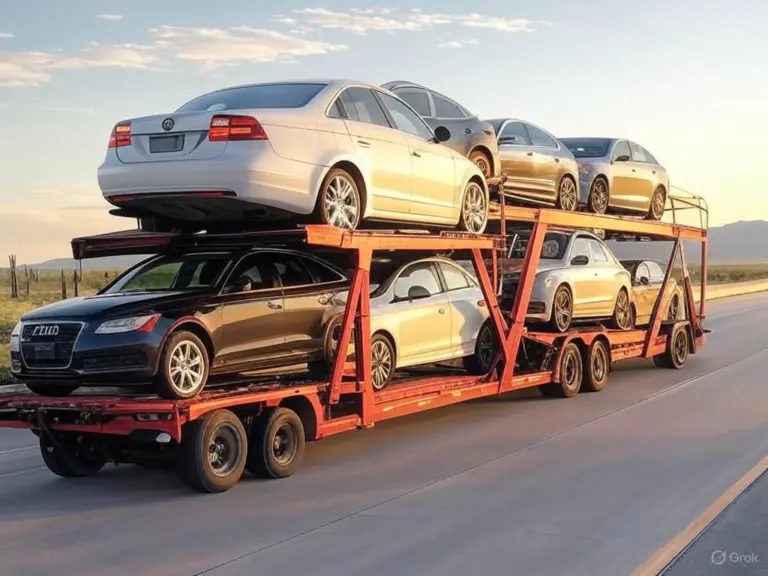
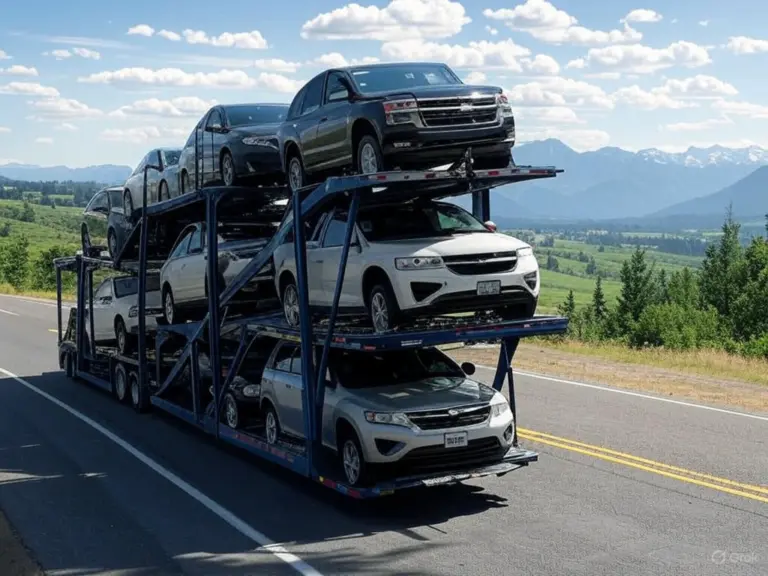
Open transport is the multi-level car carrier you pass on the highway every day: a tractor pulling a two-deck rack with cars on top and bottom, sometimes with one more over the cab. Smaller open options include wedge trailers and gooseneck hotshot rigs that haul a few cars at a time. Because one truck moves many vehicles per trip, open transport is the most common and usually the most affordable way to ship a car.
Those big rigs are specialized equipment under federal size rules. The Federal Highway Administration regulation at 23 CFR 658.13 says states cannot hold traditional automobile transporters to an overall length limit under 65 feet, or stinger-steered transporters to less than 75 feet, and it allows at least 3 feet of front and 4 feet of rear cargo overhang. That rule is why a full-size open carrier can stack so many cars legally. It is also why your car might ride on the top deck, at the front over the cab, or at the very back of the rack, depending on how the driver builds the load.
What open transport exposes your car to: weather, road grime, bugs, small road debris, and anything that drips from a vehicle on the deck above if you ride on the bottom. For the vast majority of daily drivers, SUVs, and work trucks, that means a car that shows up needing a wash, not a body shop.
What enclosed car transport really is
Enclosed transport puts your car inside a hard-sided or soft-sided trailer. Hard-sided trailers are fully walled and roofed. Soft-sided trailers use heavy curtains over a frame. Both keep out rain, hail, sun, road salt, and flying gravel. Many enclosed trailers carry fewer cars than an open rack, and some are single-car or two-car units built for high-value vehicles.
The bigger upgrade is often the loading equipment, not just the walls. Many enclosed carriers use liftgates instead of steep ramps, which matters for lowered cars, long front splitters, and anything with little ground clearance. Ask about it directly. If your car scrapes on a steep driveway at home, tell us before pickup so we can match a trailer with a liftgate or low-angle ramps.
Open vs enclosed car transport at a glance
| Factor | Open transport | Enclosed transport |
|---|---|---|
| Typical cost | Lower, since many cars share the truck | Higher, since fewer cars share the truck |
| Protection | Exposed to weather and road debris | Shielded from weather, debris, and view |
| Truck availability | Most carriers run open, so more trucks and routes | Fewer trucks, so pickup can take longer to book |
| Loading | Ramps, usually steeper | Often liftgates or low-angle ramps |
| Best fit | Daily drivers, SUVs, pickups, dealer and auction cars | Classics, exotics, show cars, new paint, low clearance |
When open transport is the smart call
Open transport makes sense for most people most of the time. Choose it when:
- It is a daily driver. Your car already lives outside in rain and sun. A week on an open rack is not much different from a week in a parking lot.
- You are moving or relocating. Budget usually matters more than showroom condition when the whole house is moving too.
- You bought from a dealer, auction, or online lot. Open carriers run these routes constantly, so pickup tends to be faster.
- Timing is tight. More open trucks on the road means more chances to fit your pickup window.
- The vehicle is a standard pickup or SUV. Stock-height trucks and crossovers fit on open racks all the time.
Shipping on a busy corridor? Our Texas car transport and California car transport pages cover what moves in and out of two of the highest-volume car shipping states.
When enclosed transport is worth the premium
Enclosed transport is not a luxury upsell when the car itself is the investment. Book it when:
- The car is a classic, collector, or exotic. Original paint, rare trim, and limited production numbers are hard or impossible to replace.
- It has fresh paint, a new wrap, or ceramic coating. Gravel chips and road film on new work are an expensive way to save a few hundred dollars.
- It sits low. Lowered suspensions, splitters, and long overhangs are easier to load on a liftgate.
- It is going to a show, auction, or buyer. Arriving clean and ready to present can matter as much as arriving at all.
- Weather on the route is rough. Winter road salt, hail season, or long desert stretches are good reasons to keep a nice car covered.
- You want privacy. An enclosed trailer keeps a high-value car out of sight at truck stops and overnight parking.
How cost and timing usually compare
Enclosed transport costs more because the truck carries fewer cars, so each car pays a bigger share of fuel, driver time, and insurance. How much more depends on the route, the season, the vehicle size, and whether the car runs. Our car shipping company guide walks through the add-ons that move a price up or down. Treat any number you see online as a range, not a bid.
Timing is the other trade-off. Because far more carriers run open equipment, an open load usually gets assigned to a truck sooner. Enclosed loads can need a little more lead time, especially on less-traveled routes. If your date is fixed, book early and tell us whether open is acceptable as a backup.
Vehicles that do not fit either standard option
Some vehicles are too tall, too heavy, or too long for a standard car carrier, open or enclosed. Lifted trucks on big tires, dually pickups with campers, box trucks, and project cars that do not roll straight often go better on a flatbed, step deck, or hotshot trailer. See our flatbed transport near me page for how we handle those. Motorhomes and travel trailers are a separate service too; start with our RV transport near me page.
And if the vehicle is roadworthy and plated, there is a third option that skips the trailer completely. Our driveaway transport Guide explains when a professional driver beats loading on any trailer.
How to vet the carrier, whichever trailer you choose
Open or enclosed, the truck is only as good as the company running it. Before you release a car, check that the carrier has active operating authority and insurance on file with the Federal Motor Carrier Safety Administration. You can look up any carrier by USDOT or MC number on the FMCSA SAFER Company Snapshot, and check authority and insurance filings on the FMCSA Licensing and Insurance site. Logi Transports is a licensed broker (MC-1636889, USDOT 4230991), and we only tender loads to carriers we have checked.
Ask three questions on every quote: Is the price all-in, including any fuel surcharge? Is the pickup window a range or a promise? What does the carrier’s cargo insurance cover, and what is the deductible? Get the answers in writing.
Prep checklist before pickup
- Wash the car so you and the driver can actually see existing chips, scratches, and dents.
- Photograph every panel, the roof, wheels, and odometer, with timestamps, before the driver arrives.
- Walk the inspection report (bill of lading) with the driver at pickup and again at delivery before you sign.
- Remove personal items and loose accessories. Car carriers are not set up to move household goods, and loose items can shift.
- Leave about a quarter tank of fuel or less to keep weight down while still allowing loading.
- Fold mirrors, retract antennas, and secure spoilers or anything that could catch wind.
- Disable toll tags and alarms so you do not pay for the carrier’s route or drain the battery.
- Tell us if it does not run. Inoperable cars need a winch or forklift at both ends, and that changes the truck we book.
What to send for an accurate quote
The fastest quotes come from complete details. Send us:
- Year, make, and model, plus any lift, lowering, oversized tires, or racks
- Pickup and delivery ZIP codes, and whether either is a residence, dealer, auction, or storage lot
- Open or enclosed, or “open unless enclosed is close in price”
- Running or not running, and whether it steers and brakes
- Your first available pickup date and any hard delivery deadline
- Approximate value if you are considering enclosed transport
The bottom line
For most daily drivers, open car transport is the right mix of price and speed. For classics, exotics, fresh paint, low clearance, or any car you would cry over if it got chipped, enclosed transport is worth the extra cost. If you are on the fence, tell us the car and the route and we will lay out both options side by side, with real carrier availability instead of a guess.
Ready to ship? Call (864) 791-5644, email quotes@logitransports.com, or fill out the Logi Transports quote request form. We will match your car with the right trailer, open or enclosed, and keep you posted from pickup to delivery.