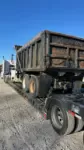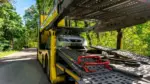


You won the dump truck at auction, bought it from a dealer, or need it off a jobsite by Friday. Knowing how to transport a dump truck starts with three facts: bed-down height, empty (shipping) weight, and whether the truck runs under its own power. Get those right and Logi Transports can match the move to driveaway, flatbed, step deck, or RGN — without surprise permits or a trailer that will not clear the load.
Ready for a real quote? Call (864) 791-5644, email quotes@logitransports.com, or use our quote request form. Send travel-position specs and we will route the right equipment for your dump truck transport.
Why trailer choice (and driveaway) matters for dump trucks
Straight dumps and articulated dump trucks (ADTs) look similar in a brochure photo and behave very differently on a trailer. A highway-style Class 7 or Class 8 dump with the bed locked down may stay inside legal height on a flatbed or step deck. An ADT with a tall body, wide tires, and articulation joints often needs a lower well — typically an RGN — and locked articulation before it moves an inch.
One non-negotiable: the bed must be fully down for travel height. Measuring with the hoist partially raised, a tarp frame sticking up, or a brochure “working” photo will understate height and can push you into oversize territory you did not plan for. If you are comparing options, our guide on RGN vs step deck vs flatbed walks through when each deck type wins for heavy equipment.
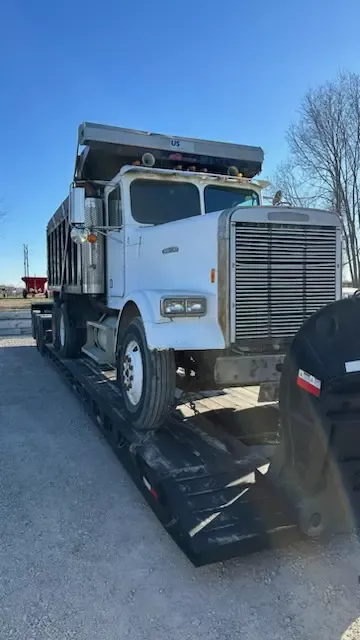
The legal envelope: height, width, and weight for dump truck transport
Federal size and weight rules set the Interstate baseline; states fill in height and many route details. The FHWA maintains an overview of freight size and weight policy. There is no federal maximum vehicle height — states set height limits, commonly in the roughly 13’6″ to 14′ range, as summarized in FHWA’s federal size regulations report. On the National Network, federal width is generally 102 inches under those same size regulations.
Weight on the Interstate system is governed by the Federal Bridge Formula: typically up to 80,000 lb GVW, 20,000 lb on a single axle, and 34,000 lb on a tandem, subject to formula and state additions. Dump trucks on trailers can approach those limits quickly once you add deck, tractor, and securement — which is why empty/shipping weight and axle spacing matter for the quote.
If your origin or destination is Florida, state law sets height at 13 feet 6 inches inclusive of load (Florida Statute 316.515). Other states on your corridor may be similar or slightly higher; the safe habit is to treat bed-down height plus trailer deck as the number that decides legal vs permitted travel. When that stack exceeds the legal envelope on your route, you are in oversize territory — see our oversize load transport service page for how Logi handles permitted moves.
We do not invent escort triggers, exact permit fees, or OEM shipping weights in this Guide. Those depend on each state’s rules, your exact dimensions, and the carrier’s equipment. What we will do is take your travel-position numbers and tell you honestly whether driveaway, a legal-height trailer, or a permitted RGN is the realistic path.
How to transport a dump truck: measure in travel position
Brochure dimensions and “working height” photos are not shipping dimensions. A dump truck advertised at one height in working mode can sit several inches lower — or higher, if a tarp frame or exhaust tip was left out of the photo — once it is actually ready to roll. Measure the unit the way it will ride: bed fully lowered and locked, no raised hoist, and accessories accounted for. If you only have a plate weight and a tape measure on auction day, that is still enough to start a serious quote.
- Empty / shipping weight — scale ticket or plate weight without payload. Payload left in the bed changes axle loads and can force a heavier trailer or permit.
- Height with bed fully down — ground to highest point (cab, exhaust, tarp system, or body). This drives flatbed vs step deck vs RGN.
- Width — body, duals, and mirrors. Note anything that sticks past the fenders.
- Length — bumper to bumper or overall, including any overhanging bed or hitch.
- Runs vs non-running — a runner that steers and brakes opens driveaway or drive-on RGN options; a dead unit needs winch, ramps, and different securement planning.
- ADT articulation lock — if it articulates, confirm the lock/pin is present and usable before loadout.
Those six items are what our brokers need before we promise a trailer type. For cost context on similar equipment moves, see heavy equipment transport cost 2026. Auction buyers often pair this checklist with our notes on best heavy equipment auctions so loadout day is not the first time anyone measures height.
Driveaway vs flatbed vs step deck vs RGN
Matching how to transport a dump truck to the right mode is where most quotes get accurate — or get revised on load day. Deck heights below are industry-typical planning figures, not FHWA mandates. Actual trailer decks vary by make, model, and load; we confirm against your bed-down height and route before booking.
| Mode | Typical deck / well (planning) | When it fits a dump truck |
|---|---|---|
| Driveaway | N/A (runs on its own axles) | Titled, insured, legal, roadworthy Class 7–8 dump that can run under its own power on the planned route |
| Flatbed | ~48–60 in deck | Shorter dumps whose bed-down height stays legal stacked on a standard deck |
| Step deck | ~36–42 in lower deck | Taller bodies that need a lower platform than a flatbed without going full RGN |
| RGN | ~18–24 in well | Heavy, tall, ADT, or non-running units that need drive-on / winch-on and maximum height clearance |
Driveaway is not “cheaper flatbed.” It is a different product: the dump must be legal to operate as a vehicle, with title, insurance, and roadworthiness covered for the planned miles. Learn the scope in what is driveaway transport. When the truck does not run, needs major repairs before it can be driven, or bed-down height will not clear on a standard deck, we shift to trailer modes — compare decks in RGN vs step deck vs flatbed, and see local flatbed options at flatbed transport near me.
In practice, many straight dumps that run well and stay under legal stacked height book on flatbed or step deck. ADTs, non-runners, and tall bodies with tarp hardware more often need the RGN well so the unit can drive or winch on and stay inside state height once the deck is accounted for. Tell us which category you are in up front and we will not waste a load day discovering it at the gate.
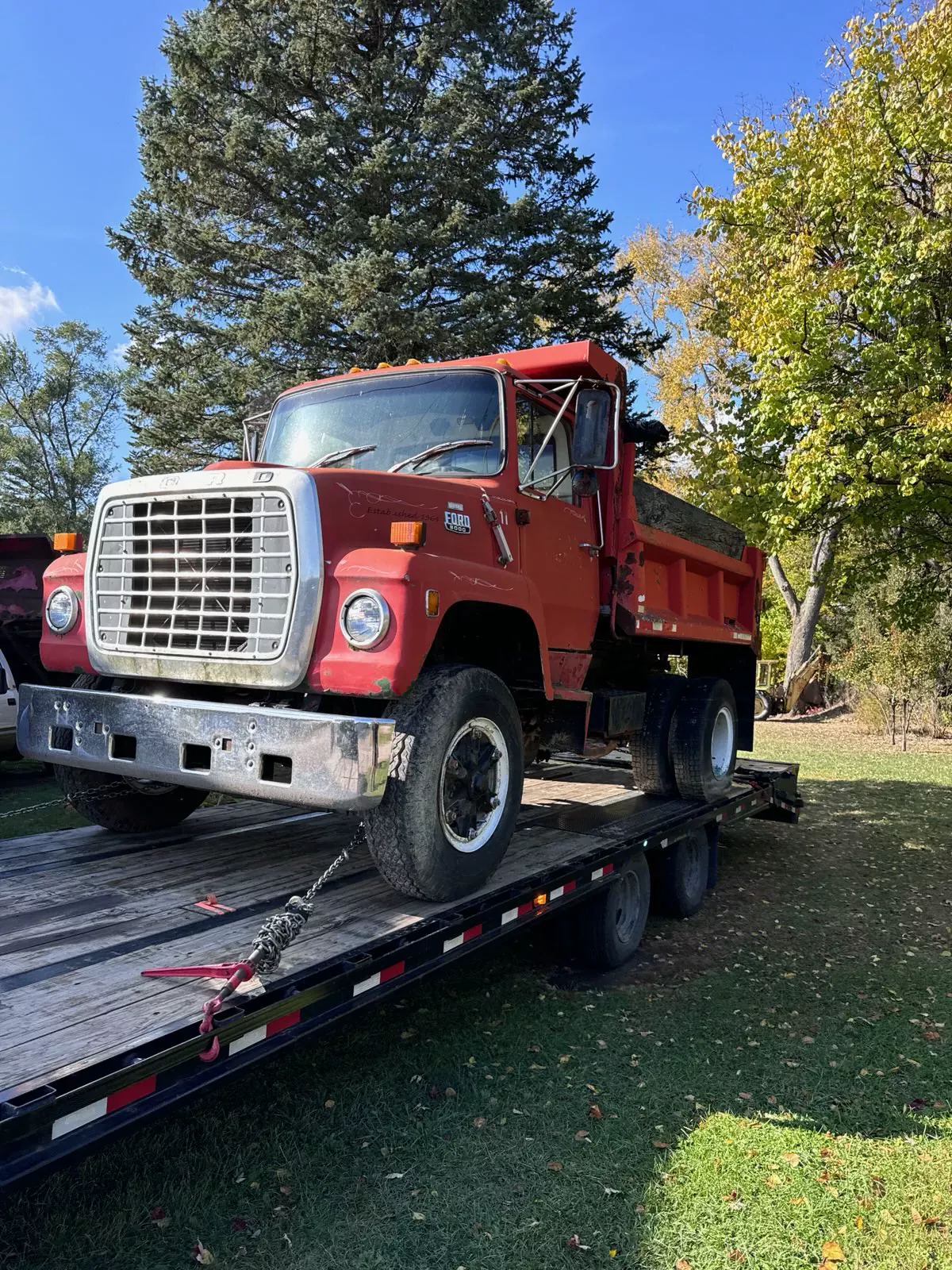
Prep checklist and cargo securement
Good prep protects the truck and keeps load time short. Pair this list with our broader guide on how to prepare heavy equipment for transport.
- Lower the bed fully and lock the hoist; do not ship with the body raised.
- Remove loose debris, rocks, and scrap from the bed so nothing becomes a projectile.
- Secure or remove tarp systems, side boards, and loose tools.
- Check fluids for leaks; park so drips are visible before the carrier arrives.
- Battery connected or clearly labeled disconnected; keys and remote available for runners.
- Photograph all four sides and any existing damage before loadout.
- State clearly whether the truck runs, steers, and brakes — or is a dead unit.
Securement for heavy vehicles and equipment is not guesswork. FMCSA’s cargo securement rules overview points carriers to Part 393. For vehicles and equipment weighing 10,000 lb or more (wheels or tracks), 49 CFR 393.130 requires accessory equipment to be lowered and secured, and a minimum of four tiedowns, among other requirements. Your carrier applies those rules; your job is to deliver a clean, bed-down, debris-free unit so chains and binders can do their work.
Site access: gates, ground, and auction loadout
The perfect trailer still fails if the truck cannot reach it. Note gate width and height, overhead wires, soft ground or wet clay, and whether a lowboy or RGN can turn around without jackknifing into a ditch. Auction yards often restrict loadout to daylight hours and require a contact on site — put that person and a direct number on the quote so the driver is not hunting for a gate code while detention clocks. Jobsites may need a spotter or a short tow to firm pavement before the trailer backs in; say so early if the unit sits on soft fill or behind a temporary fence.
Looking for a broker who already moves heavy iron in your region? Start with equipment transport near me and send origin/destination with your travel-position measurements.
What to send for a dump truck transport quote
Copy this list into your email or quote request so we can price driveaway vs trailer without back-and-forth:
- Year, make, model, and VIN or serial if available
- Empty / shipping weight (scale ticket preferred)
- Height with bed fully down; width including mirrors/body; overall length
- Straight dump vs ADT; articulation lock status if ADT
- Runs / steers / brakes — or non-running
- Origin and destination cities (and zip if known)
- Desired pickup window and any auction or gate constraints
- Photos: front, side, rear, and bed-down height reference if possible
Move your dump truck with Logi Transports
Logi Transports LLC is a Sebastian, FL freight broker. We match dump trucks to driveaway, flatbed, step deck, or RGN based on bed-down height, weight, and whether the unit runs — then coordinate permitted oversize when the legal envelope requires it. Learn more about working with us on Why Logi.
CEO Benjamin C. Hall · MC-1636889 · USDOT 4230991 · Sebastian, FL
Call (864) 791-5644, email quotes@logitransports.com, or submit the quote request form with your travel-position specs. Tell us you need dump truck transport and we will line up the right mode.