

You bought a used container for storage on your farm, a job site needs an office box dropped next week, or you are building a container home and the units are sitting at a depot two states away. Learning how to transport a shipping container comes down to a few decisions: what size and type of box you have, whether it is empty or loaded, what trailer fits the delivery spot, and how it gets on and off the truck. Get those right and the move is simple. Get them wrong and you pay for a second truck or a crane you did not plan for.
Want a price now? Call (864) 791-5644, email quotes@logitransports.com, or fill out our quote request form. Tell us the container size, whether it is empty or loaded, the pickup and delivery addresses, and how you want it unloaded, and Logi Transports will match it with the right carrier.
Know your container: sizes and weights
Most containers moved inland are standard dry boxes. The outside dimensions are set by size class, while tare (empty) weight varies a little by builder. Here are the published numbers from two major ocean carriers, CMA CGM and Ocean Network Express (ONE):
| Container | Outside size (L x W x H) | Average tare weight | Max gross weight |
|---|---|---|---|
| 20 ft standard | 20 ft x 8 ft x 8 ft 6 in | 2,150 to 2,230 kg (about 4,700 to 4,900 lb) | 30,480 kg (about 67,200 lb) |
| 40 ft standard | 40 ft x 8 ft x 8 ft 6 in | 3,640 to 3,720 kg (about 8,000 to 8,200 lb) | 30,480 or 32,500 kg |
| 40 ft high cube | 40 ft x 8 ft x 9 ft 6 in | 3,700 to 3,900 kg (about 8,200 to 8,600 lb) | 30,480 or 32,500 kg |
| 45 ft high cube | 45 ft x 8 ft x 9 ft 6 in | 4,650 to 4,700 kg (about 10,300 lb) | 30,480 kg (some up to 32,500 kg) |
Two numbers matter most for trucking. First, every standard container is 8 feet wide, so width is almost never the problem. Second, height is. A high cube is a full foot taller than a standard box, and that extra foot is what decides which trailer you need. Always check the data plate on the door for the real tare and max gross weight of your container, since used and modified boxes vary.
Empty or loaded: why it changes everything
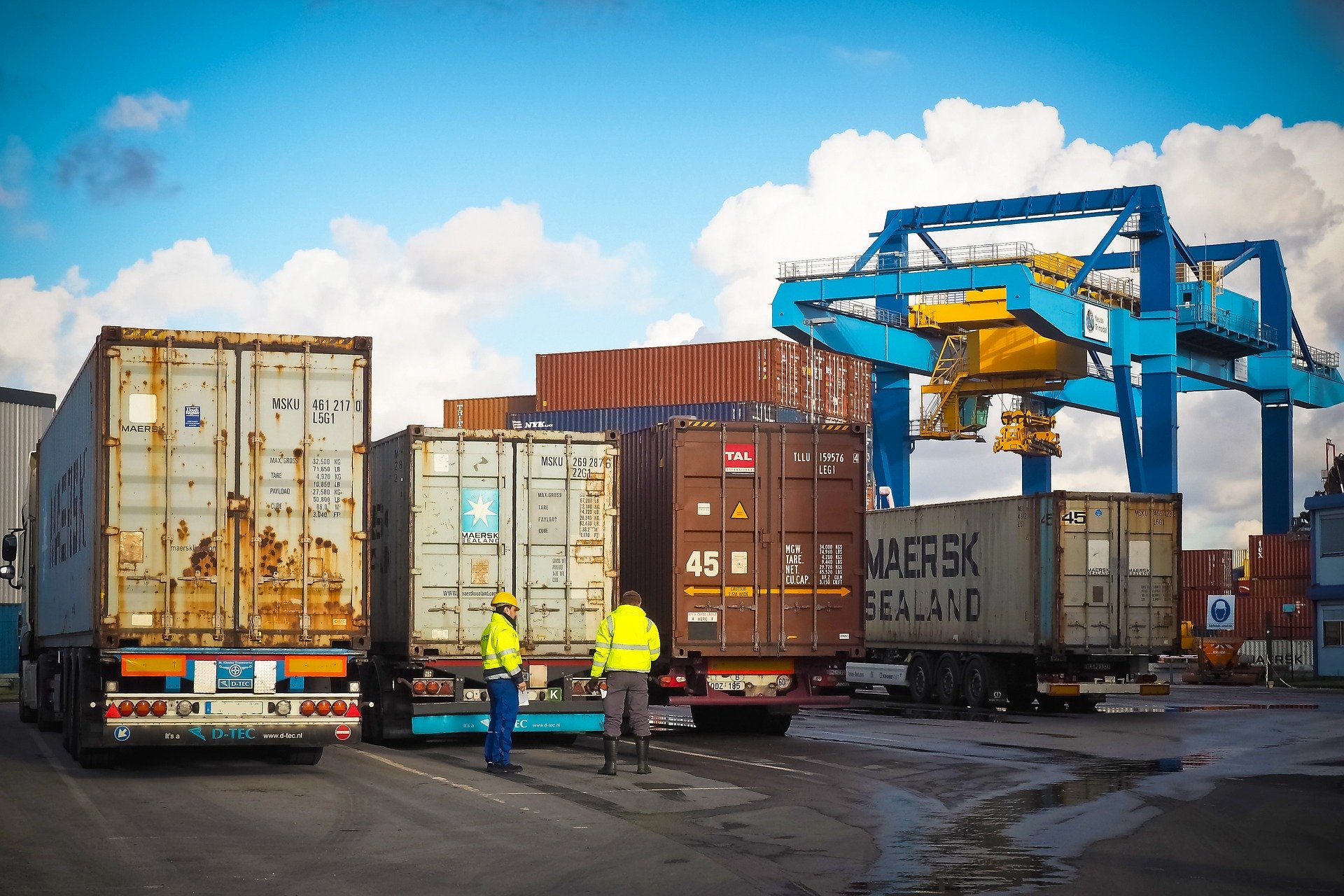
An empty 20 ft box weighs about as much as a full-size pickup, so it is light freight. A loaded box is a different story. Federal rules in 23 CFR 658.17 cap gross vehicle weight on the Interstate at 80,000 pounds, which includes the truck, the trailer, the container, and everything inside it. A heavily loaded 40 ft container can eat most of that limit before the truck and trailer are counted.
If your loaded container pushes the total over the legal limit, it becomes an overweight load that needs state permits and a planned route. Logi handles those moves through our oversize load transport service. For most storage and job site moves, though, the container travels empty or lightly loaded, and that keeps things simple and cheaper.
Which trailer to use for a shipping container
The right trailer depends on the box size and, just as important, how you want it unloaded at the other end.
| Trailer | Best for | How it unloads |
|---|---|---|
| Container chassis | Port and rail moves where the box stays on wheels until a forklift or crane lifts it off. | Needs a top pick, reach stacker, or crane at delivery. Not for dropping on your land. |
| Tilt bed or rollback (landoll style) | Dropping an empty container straight onto the ground at a farm, home, or job site. | The deck tilts and the box slides off with a winch. No crane needed, but the driver needs room to pull forward. |
| Flatbed | Empty or loaded containers going to a site with a forklift or crane. | Lifted off at delivery. Good for standard height boxes. |
| Step deck | High cubes and tall loads, or a container plus other freight. | Lifted off at delivery. The lower deck keeps total height down. |
Our RGN vs step deck vs flatbed Guide explains deck heights in plain terms. The short version: a 9 ft 6 in high cube sitting on a standard flatbed can come close to or exceed the 13 ft 6 in height limit many states use. FHWA notes there is no federal height limit for commercial vehicles, and most states set theirs between 13 ft 6 in and 14 ft. A step deck usually solves the problem without permits. If you need a flatbed, see our flatbed transport near me page.
How a container must be tied down
Containers are not strapped like loose freight. Under 49 CFR 393.126, a container on a chassis must be locked at all four lower corners so it cannot move more than half an inch in any direction. On a flatbed or other trailer, a loaded container has to rest on all four lower corners and be secured with chains, wire rope, or locking devices at the corners, with the front and rear secured independently. The same rule sets limits for empty containers on non-chassis trailers, including no more than five feet of overhang at the front or rear. A good carrier knows these rules. Ask how they plan to secure your box before pickup.
How to prepare a shipping container for transport
A little prep keeps the move on schedule and keeps you from paying for a truck that waits around.
Container transport checklist
- Confirm size and type: 20 ft, 40 ft, or high cube, plus any modifications like extra doors, windows, vents, or a roll-up door.
- Check the data plate: note the tare and max gross weight on the door.
- Empty or secure the contents: if you ship it loaded, block and brace everything inside so weight cannot shift. Put heavy items low and centered.
- Get a real weight: for loaded boxes, use a scale ticket or a solid estimate. Guessing low causes overweight problems at the scale house.
- Lock the doors: close and latch both doors and add a lock. Remove anything hanging off the outside.
- Inspect the corner castings: the carrier will secure the box at the corners, so they need to be solid, not rusted through.
- Have the paperwork ready: bill of sale, release number if you are picking up from a depot, and pickup hours.
- Take photos: date-stamped shots of all sides, the roof, and the floor before pickup.
Many of the same habits apply to machinery. Our Guide on how to prepare heavy equipment for transport covers photos, paperwork, and tie-down points in more detail.
Plan the delivery site before the truck shows up
Most container delivery problems happen in the last hundred feet. A tilt bed truck needs a lot of straight room to slide a box off. Walk the site and check:
- Length of clear space: a tilt bed drop needs room for the truck and trailer plus the container in a straight line, and room to pull forward as the box slides off. Ask your carrier for the exact clearance their rig needs.
- Overhead clearance: the deck tilts up as it unloads, so look for power lines and tree limbs above the drop spot.
- Ground conditions: firm, level, and dry. A loaded truck sinks fast in soft soil or wet grass.
- Base for the container: set gravel, concrete blocks, or railroad ties in place ahead of time so the box sits level and off the dirt.
- Door direction: decide which way the doors should face before the truck arrives. Turning a container after it is down is hard.
- Gates and turns: measure gate width and look for tight corners on the way in.
If the site is tight, a crane or forklift unload from a flatbed or step deck may be the better plan. Send us photos of the drop spot, and we will help you pick the right setup.

Port pickups, depots, and container homes
Where the box starts changes the job. A container leaving a port or rail ramp usually moves on a container chassis, and the terminal handles the lift. A used container bought from a depot is often loaded onto a tilt bed or flatbed by the depot’s forklift. A finished container home or office with windows, framing, and finishes needs gentler handling, more careful securement, and sometimes a crane at delivery. If your container is built out as living space, our Guide on how to move a tiny house covers the same prep for interiors and fixtures.
Own a trailer or chassis already? Logi can supply just the truck and driver through our power-only service. Our what is power-only transport Guide explains how that works.
What affects the cost to transport a shipping container
No two container moves cost the same. These factors drive most of the price:
- Distance and lane: busy freight lanes are easier to cover than remote rural routes.
- Trailer type: a tilt bed drop costs differently than a flatbed move with a crane at delivery.
- Size and weight: a 40 ft high cube or a heavy loaded box can need a step deck, permits, or a heavier rig.
- Unloading: a crane or forklift rental at delivery adds to the total.
- Site access: tight driveways, soft ground, or long waits add time.
- Timing: rush pickups and flexible dates price differently.
For a broader look at how we price trailer and deck work, see our heavy equipment transport cost Guide and our equipment transport near me page.
Common mistakes to avoid
- Booking a flatbed for a ground drop with no crane or forklift waiting at delivery.
- Putting a high cube on a standard flatbed without checking total height.
- Guessing the weight of a loaded container.
- Forgetting the depot release number or pickup hours.
- Leaving no straight room for a tilt bed to unload.
Get a shipping container transport quote from Logi Transports
Logi Transports is a freight broker based in Sebastian, Florida (MC-1636889, USDOT 4230991). We match your container with a vetted carrier and the right trailer, whether that is a tilt bed drop on your land, a step deck for a high cube, or a flatbed with a crane at the other end. Call (864) 791-5644, email quotes@logitransports.com, or fill out our quote request form. Send the container size, empty or loaded weight, pickup and delivery addresses, and how you want it unloaded, and we will get back to you fast.