

You bought a tiny house from a builder three states away, you are moving to new land, or you found a used one on a lot and need it home. Learning how to move a tiny house comes down to a few things: knowing what kind of tiny house you have, measuring it thehow to move a tiny house
way a carrier needs, picking the right truck, and prepping it so the windows, siding, and interior arrive in one piece. A tiny house on wheels looks like a trailer, but it rides more like a small building, so it needs more care than a camper.
Want a price now? Call (864) 791-5644, email quotes@logitransports.com, or fill out our quote request form. Send us the length, width, height, weight, and the pickup and delivery locations, and Logi Transports will match your house with the right carrier.
First, what kind of tiny house are you moving?
The way your house is built decides almost everything about the move. Before you ask for quotes, figure out which of these you have.
| Type | How it moves | What to know |
|---|---|---|
| Tiny house on wheels (on its own trailer) | A truck hooks up to the house’s trailer and pulls it, the same way power-only works for any trailer. | The trailer’s tires, axles, brakes, lights, and coupler must be road ready. This is the most common setup. |
| Tiny house on a foundation or skids | It has to be lifted onto a flatbed, step deck, or a tilt or rollback deck with a crane, forklift, or winch. | Needs a loading plan at both ends and enough room for the equipment to reach the house. |
| Shed-style or modular cabin | Usually moves on a deck trailer like other building freight. | Width is often the deciding factor for permits and route planning. |
If your house is already on a sound trailer, read our Guide on what power-only transport is. For deck loads, our RGN vs step deck vs flatbed Guide explains why a lower deck can keep a tall house under height limits.
Measure your tiny house the way a carrier needs
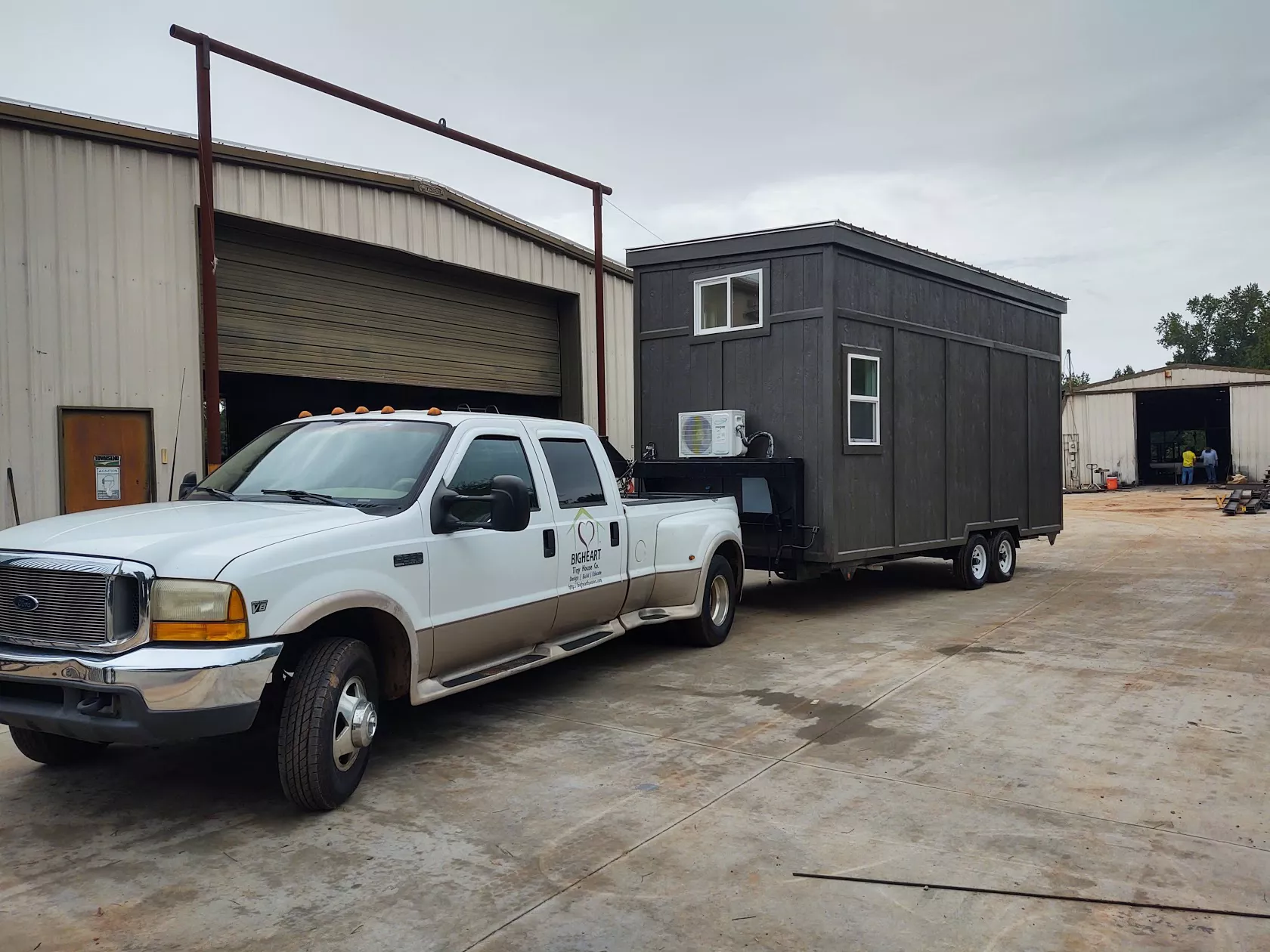
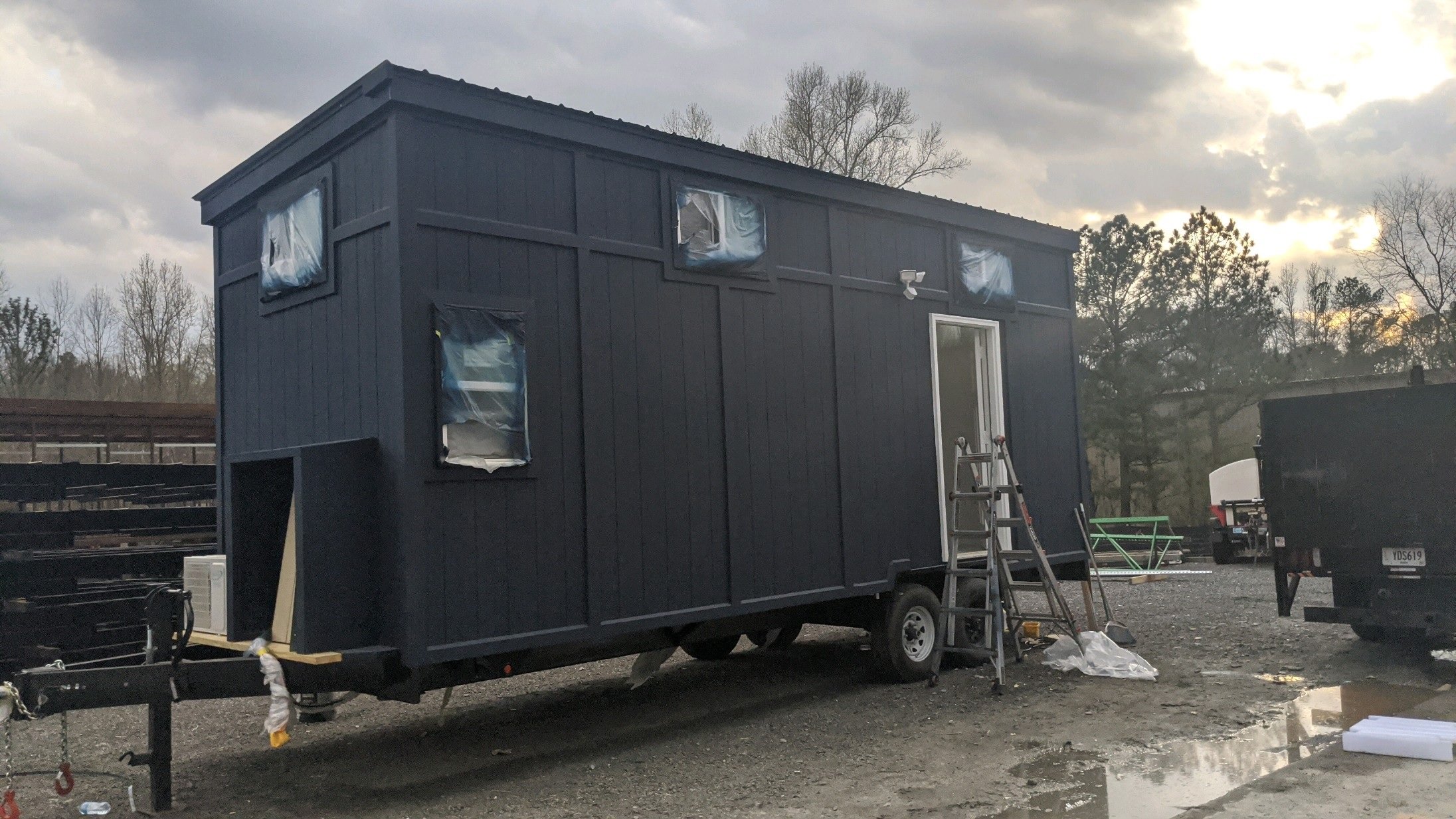
A builder’s listing might say “24-foot tiny house,” but that is usually the box, not the whole unit on the road. Get these numbers before you ask for a quote, and measure them yourself if you can.
- Total length: from the tip of the trailer tongue to the furthest point at the back, including porches, ladders, or racks.
- Width: the widest point, including eaves, trim, window boxes, mounted AC units, and fenders.
- Height: from the ground to the highest point, including the roof peak, vent caps, chimney pipe, or solar panels.
- Weight: a scale ticket is best. The trailer’s VIN plate shows its GVWR, which is the most the trailer is rated to carry, not what the house actually weighs.
- Hitch type: bumper pull or gooseneck, plus the ball or coupler size.
Need help with tape-measure basics? Our Guide on how to measure a fifth wheel trailer walks through the same tongue-to-tail and ground-to-roof method.
Width and height: the numbers that decide your permits
Most tiny houses on wheels are built right up to the road limits, so a few inches matter. According to FHWA, the Surface Transportation Assistance Act of 1982 set the standard commercial vehicle width at 102 inches, which is 8 ft 6 in. FHWA also notes there is no federal height limit for commercial vehicles. States set their own, and most range from 13 ft 6 in to 14 ft.
Many tiny houses on wheels are built close to those numbers. If your house, eaves, or mounted gear push it past the width limit, or it ends up taller than a state allows once it is hooked up or loaded on a deck, it becomes an oversize load. That means state permits, set travel times, and sometimes escort vehicles. Logi handles those moves through our oversize load transport service, and we plan the route around low bridges and the strictest state on the trip.
Who can tow it: the CDL and brake rules
Tiny houses are heavy for their size. Under 49 CFR 383.91, a combination with a gross combination weight rating of 26,001 pounds or more, where the towed unit is rated over 10,000 pounds, is a Group A combination. A driver needs a Class A CDL for that. Many tiny house trailers are rated well over 10,000 pounds, so a professional move often calls for a properly licensed driver and a truck rated for the load, not just a big pickup.
Brakes matter too. Federal rule 49 CFR 393.42 says every commercial motor vehicle must have brakes on all wheels, with a few narrow exceptions for light trailers. Make sure the trailer brakes and breakaway system work before pickup. A carrier will not want to tow a heavy house with dead brakes, and neither should you.
How to prep a tiny house for transport
A house moving at highway speed takes wind, vibration, and bumps that it never sees parked. Use this checklist the week before pickup.
Tiny house moving checklist
- Secure everything inside: pack dishes, books, and decor in boxes. Strap or block the fridge, washer, and furniture. Latch cabinet doors and drawers with tape or child locks.
- Lock the loft: take down ladders and tie them off. Remove anything stored up high.
- Windows and doors: latch every window and door. Tape large panes or add a plywood cover on the front window, which takes the most wind and road debris.
- Roof and exterior: check flashing, vent caps, and roof fasteners. Remove or secure solar panels, antennas, chimney caps, and loose trim.
- Propane: shut off the tanks at the valve. Remove tanks if the carrier asks you to.
- Water: drain fresh, gray, and black tanks and blow out lines in cold weather.
- Electrical: unplug shore power and turn off the battery bank.
- Stabilizers and blocks: raise jacks and remove blocks, skirting, and steps.
- Photos: take date-stamped photos of all four sides, the roof, and the interior before pickup.
Check the trailer before the truck shows up
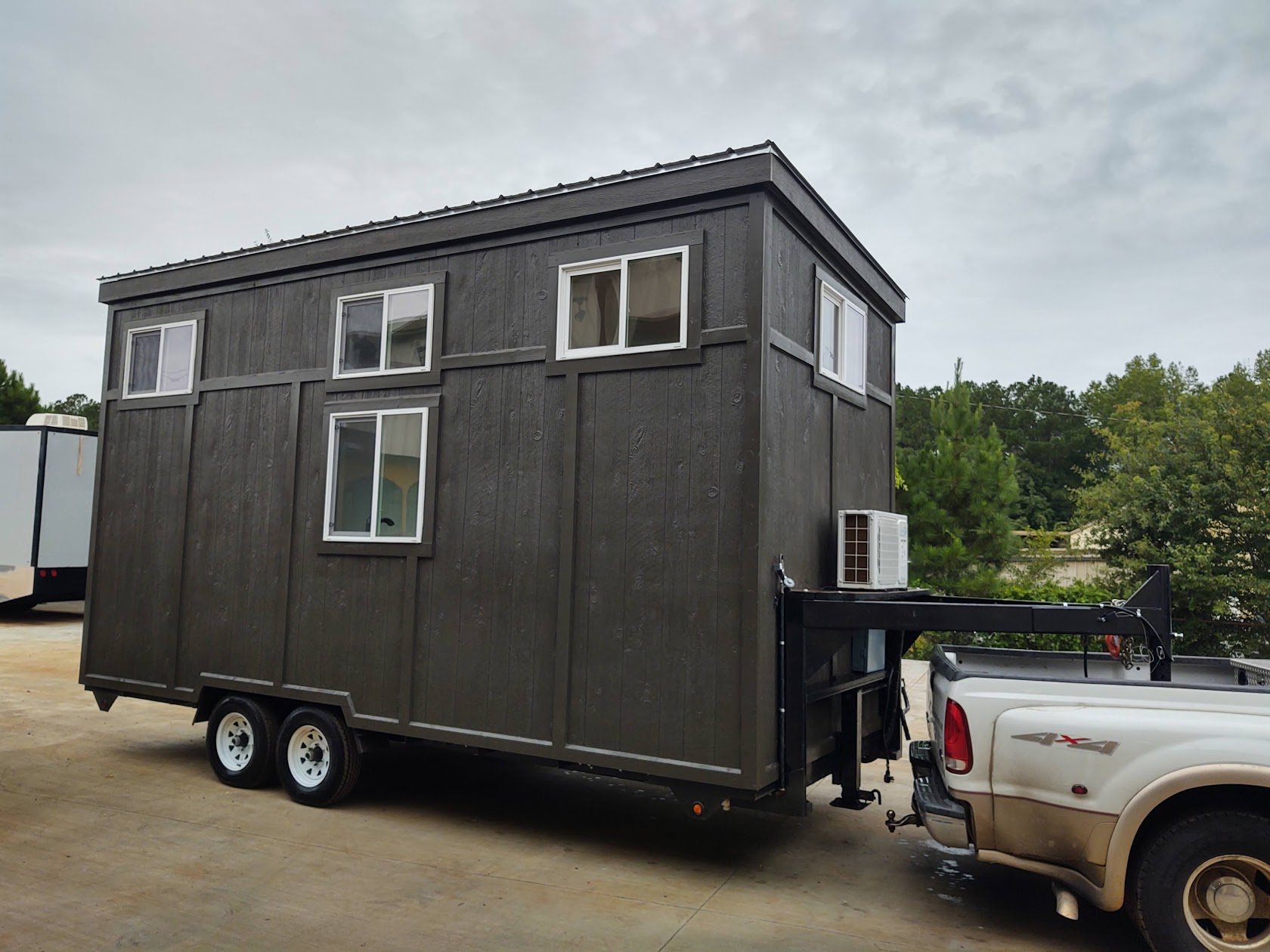
With a tiny house on wheels, the trailer is part of the shipment. Most roadside problems come from tires, bearings, and wiring that sat unused for months. Check tire age and pressure, the wheel bearings, the lights and wiring plug, the coupler and safety chains, and the brakes. Make sure the trailer is registered and the title or bill of sale is ready. Tell us about any weak spot up front so we can plan around it. Our power-only trailer page explains how we move customer-owned trailers.
Plan pickup and delivery access
Tiny houses often sit in backyards, on rural land, or at the end of a gravel drive. Before pickup, walk the path the truck will take and look for:
- Low tree limbs and power lines along the driveway or road.
- Tight turns, gates, and narrow bridges.
- Soft or wet ground that a loaded truck could sink into.
- Room for the truck to back up, line up the hitch, and pull out.
- At delivery, a level spot ready for the house, with blocks or jacks on hand.
If the site is tight, we may need a smaller truck for the last stretch or a meeting point near the road. Tell us early, and send photos if you can.
What affects the cost to move a tiny house
Every quote depends on the details. These are the factors that move the price the most:
- Distance and route: longer runs cost more in total but often less per mile.
- Size: a house that needs oversize permits or escorts costs more than one inside the legal limits.
- Weight: heavier houses need a bigger truck and a properly licensed driver.
- Trailer or no trailer: towing your house on its own trailer is usually simpler than loading it on a deck.
- Access: tight rural sites, gravel roads, and extra equipment for loading add time.
- Timing: flexible pickup dates help us find a carrier already headed your way.
Moving a full-size manufactured home instead? See our mobile home transport page. Shipping a camper or travel trailer? Check RV transport near me.
Common mistakes to avoid
- Giving the box length instead of the total length with the tongue.
- Forgetting the roof vents, solar panels, or AC unit when measuring height and width.
- Guessing the weight instead of getting a scale ticket.
- Leaving loose items inside that shift and break windows or cabinets.
- Skipping a tire and brake check on a trailer that sat for a year.
- Booking a move without a clear loading and parking spot at both ends.
Why move your tiny house with Logi Transports
Logi Transports is a freight broker based in Sebastian, Florida (MC-1636889, USDOT 4230991). We match your tiny house with a vetted carrier that has the right truck and license for the job, whether that is a power-only hookup to your trailer, a flatbed or step deck for a house on skids, or an oversize move with permits and escorts. You get one point of contact from quote to delivery.
Get your tiny house moving quote
Ready to move? Call (864) 791-5644, email quotes@logitransports.com, or fill out our quote request form. Have your length, width, height, weight, hitch type, and pickup and delivery addresses handy, and we will get you a clear quote fast.