

You just bought a Class C at a dealer three states away, you are retiring to Florida and do not want to drive the coach yourself, or a rental fleet needs ten units repositioned before the season. Whatever the reason, learning how to ship a motorhome comes down to three choices: have a professional driver drive it, tow it, or haul it on a trailer. Each method fits a different coach, budget, and timeline, and picking the wrong one is how people end up with surprise fees, delays, or a coach that cannot legally make the trip.
Want a number now? Call (864) 791-5644, email quotes@logitransports.com, or fill out our quote request form. Tell us the year, make, model, length, and whether the coach runs, and Logi Transports will match the right shipping method and carrier.
The three ways to ship a motorhome
Motorhomes are self-propelled, which gives you options you do not get with a travel trailer or a fifth wheel. Here is how the three methods compare in plain terms.
| Method | How it works | Best for | Watch out for |
|---|---|---|---|
| Driveaway | A professional driver drives your motorhome from pickup to delivery. | Running, road-legal Class A, B, and C coaches; long one-way moves | Miles and engine hours go on the coach; it must be registered, insured, and roadworthy |
| Towaway | A truck tows the coach with a tow bar, saddle mount, or similar coupling while some wheels stay on the road. | Shorter chassis and moves where driving is not ideal | Coupling rules, brake requirements, and wear on the towed axles |
| Trailer (flatbed, step deck, or lowboy) | The coach is loaded onto a trailer and hauled with no wheels on the road. | Non-running coaches, new units with zero miles, Class B vans and compact Class Cs | Height and width once the coach sits on the deck; permits for oversize loads |
Driveaway is the most common way to move a running motorhome long distance, and we cover the basics in our guide to what driveaway transport is. If you already know you want a driver, our RV driveaway service page explains how Logi sets that up.
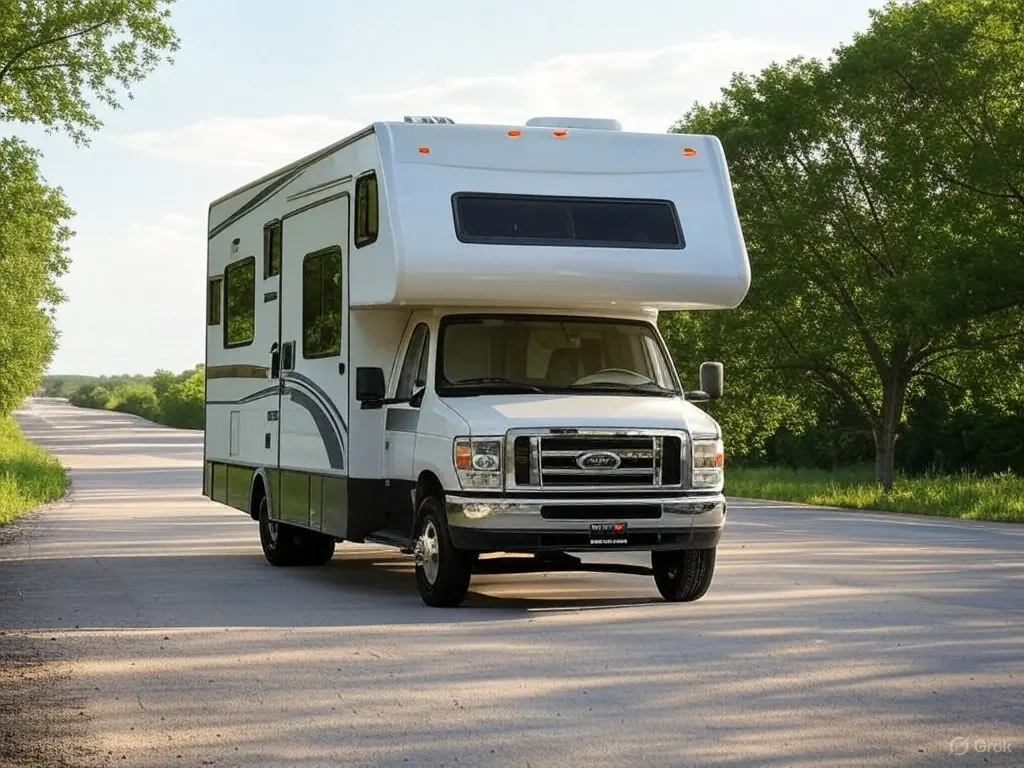
Driveaway: when driving the coach makes sense
With driveaway, a vetted driver picks up your motorhome and drives it to the destination. For a healthy coach, it is usually the simplest option: no trailer to book, no loading equipment, and the coach arrives the same way it left.
Driveaway only works if the motorhome is ready for the road. Before you book, confirm:
- The engine, transmission, brakes, and tires are in good shape, with no warning lights or known leaks.
- Registration is current and the plates are on the coach, or you have a temporary tag or in-transit permit for a newly purchased unit.
- Insurance is in place and you know how your policy treats a hired driver.
- The generator, slide-outs, awning, and leveling jacks are retracted and working, so nothing deploys on the highway.
- You are fine with the added miles. On a cross-country move that number is real, and it matters if you plan to resell soon.
If any of those are a problem, keep reading. Towaway or trailer hauling is usually the better fit.
Towaway: wheels on the road, engine off
Towaway is common in the RV and truck industry for repositioning units. Federal rules treat it as part of a driveaway-towaway operation, which 49 CFR 390.5 defines as moving an empty or unladen vehicle with one or more sets of wheels on the road. The coupling methods themselves (tow bars, saddle mounts, and full mounts) are regulated under 49 CFR 393.71, which limits how many saddle mounts and tow bars can be used in one combination and sets brake requirements for towed units.
For you, that means towaway is a carrier-level decision. A qualified carrier will look at your chassis, wheelbase, and drivetrain and tell you whether it can be towed safely and legally. Many motorhome owners never need it, but it can be a smart middle ground for short moves or when a driver is not an option.
Trailer hauling: zero miles and no wheels on the road
Hauling the coach on a trailer protects the drivetrain and keeps the odometer where it is. It is the go-to option when:
- The motorhome does not run, has brake or tire problems, or failed inspection.
- It is a new unit and the buyer wants delivery miles kept close to zero.
- It is a Class B camper van or a compact Class C that fits a standard deck without going too tall.
- The coach was damaged and is heading to a body shop or an insurance yard.
The catch is height. A motorhome is already tall, and setting it on a deck adds the trailer’s deck height on top. That is why lower decks such as step decks and lowboys come into play. Our breakdown of RGN vs step deck vs flatbed shows how deck height changes what you can haul without going overheight.
Size limits that shape your motorhome move
You do not need to become a permit expert, but two federal facts explain most of the questions a carrier will ask you.
Width
Under 23 CFR 658.15, states may not set a width limit of more or less than 102 inches for vehicles on the National Network, with Hawaii allowed to keep 108 inches. The same rule lets states issue special permits for wider loads. Most motorhomes are built to stay inside that limit, but measure mirror to mirror and check that nothing like an awning bracket or add-on ladder sticks out.
Height
The FHWA’s federal size regulations overview notes there is no federal height limit for commercial vehicles, so each state sets its own. That is why we ask for your coach’s height including roof air conditioners, antennas, and satellite domes. On a driveaway the coach’s own height is what counts. On a trailer, it is coach height plus deck height. If the total goes over a state’s limit, the load needs a permit or a lower deck. For deep dives on permits and route surveys, our sister site covers oversize loads in detail. Logi handles the matching for you.
How to prep your motorhome for shipping
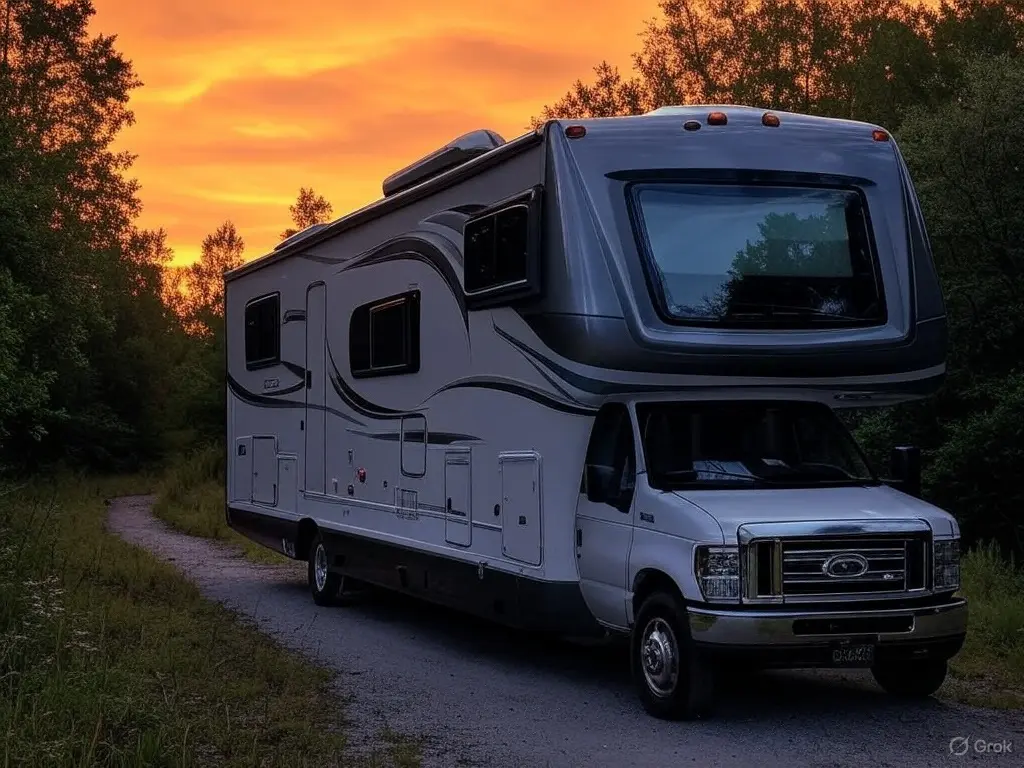
No matter which method you choose, a little prep prevents most claims and delays. Use this checklist the week before pickup:
- Photograph everything. Take date-stamped photos of all four sides, the roof if you can reach it safely, the interior, and the odometer and generator hour meter.
- Secure the inside. Latch cabinets, tape or empty the fridge, stow loose items, and remove valuables and personal paperwork.
- Retract and lock. Bring in slide-outs, the awning, steps, and leveling jacks. Lock the entry door and storage bays and keep a set of keys for the driver.
- Handle propane and tanks. Shut off propane at the tank and follow your coach manufacturer’s guidance. Drain or dump the fresh, gray, and black tanks unless the carrier asks otherwise.
- Check fuel and fluids. For driveaway, leave a reasonable amount of fuel and make sure oil, coolant, and tire pressures are where they should be.
- Disconnect the toad. If you normally flat-tow a car, ship it separately. Our car transport services can move the vehicle on its own carrier.
- Note existing damage. Point out chips, cracks, and leaks to the driver and make sure they are written on the bill of lading.
If you are also moving a towable RV, our guide on how to prepare your fifth wheel for transport covers the hitch, pin box, and trailer-specific steps.
What affects the cost to ship a motorhome
We will not quote a flat rate in a blog post, because real pricing depends on your exact coach and lane. These are the factors that move the number:
- Distance and lane. Busy routes such as snowbird moves into Florida in the fall usually have more drivers available than remote rural pickups.
- Method. Driveaway, towaway, and trailer hauling each need different equipment and labor.
- Coach size. Length, height, and weight decide which methods and trailers are even possible.
- Condition. A non-running coach needs a trailer and often a winch or extra loading help.
- Timing. Flexible pickup windows are easier to fill than a hard date during peak season.
Moving to or from the Sunshine State? See our RV transport in Florida page. For general service details, start at RV transport, and if you are still shopping around, our page on RV transport companies explains what to look for in a broker or carrier.
How to vet who ships your motorhome
Any company moving your coach across state lines for hire should have active federal operating authority. You can look up a carrier or broker’s USDOT or MC number on the FMCSA SAFER Company Snapshot before you sign anything. Ask who the actual driver or carrier will be, how insurance applies while your coach is in their care, and how damage is documented at pickup and delivery.
As a licensed broker, Logi Transports checks the carrier side for you and matches your motorhome with a driver or trailer that fits the job. You get one point of contact instead of calling a dozen outfits.
Get a motorhome shipping quote from Logi
Logi Transports is a Sebastian, Florida freight broker (MC-1636889, USDOT 4230991). We arrange driveaway, towaway, and trailer transport for Class A, B, and C motorhomes nationwide. To get an accurate quote, send us the year, make, and model, overall length and height (including roof units), whether it runs, and the pickup and delivery city and state.
Call (864) 791-5644, email quotes@logitransports.com, or use the quote request form. Tell us you need to ship a motorhome, and we will recommend the method that fits your coach, your schedule, and your budget.