
Bought a food truck from a seller three states away, sold your concession trailer to a new owner, or just landed a festival season on the other side of the country? Knowing how to transport a food truck the right way protects the kitchen you paid for and keeps you from losing weeks of sales to a bad move. This Guide walks you through your shipping options, what a hauler needs from you, and a prep checklist for the cooking gear, propane, and paperwork.
Logi Transports books food truck and concession trailer moves nationwide from our home base in Sebastian, FL. Below is the same playbook we use when you request a quote.
Food Truck vs. Food Trailer: Why It Matters for Shipping
“Food truck” covers two very different machines, and the difference decides how yours can move:
- Food trucks are motorized: step vans, box trucks, and converted buses with a kitchen built in. They have their own engine, transmission, and brakes.
- Food trailers (concession trailers) have no engine. They hitch to a ball, pintle, or gooseneck and roll on their own axles behind a tow vehicle.
Before you call for a quote, write down which one you have, the year, make, and model, and whether it runs and brakes. That one detail removes most of the back-and-forth.
Your 3 Options for Moving a Food Truck
1. Driveaway (the truck drives itself)
If your truck runs well, a professional driver can simply drive it to the destination. Driveaway is often the quickest option to schedule and usually the most cost-effective for a single running unit. The trade-off is miles on the odometer and wear on tires and brakes, so it suits trucks that are already road-ready. Our driveaway transport explainer covers how it works and when it beats putting a vehicle on a trailer.
2. Towaway (for food and concession trailers)
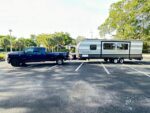
A concession trailer is towed on its own wheels behind a properly rated pickup or hotshot truck. Its tires, bearings, lights, and brakes do the work, so they must be roadworthy. If you’re new to hiring just the truck and driver, our power only transport guide explains the setup, and the power only trailer page covers trailer types we move.

Commercial towaway work follows federal coupling rules. For example, 49 CFR 393.71 limits how many tow-bar or ball-and-socket couplings can be used in one combination and sets requirements for safety chains and brakes. A professional carrier handles that side; your job is to hand over a trailer with a sound coupler, working lights, and tires that will hold up for the trip.
3. Flatbed, step deck, or RGN haul
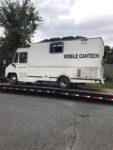
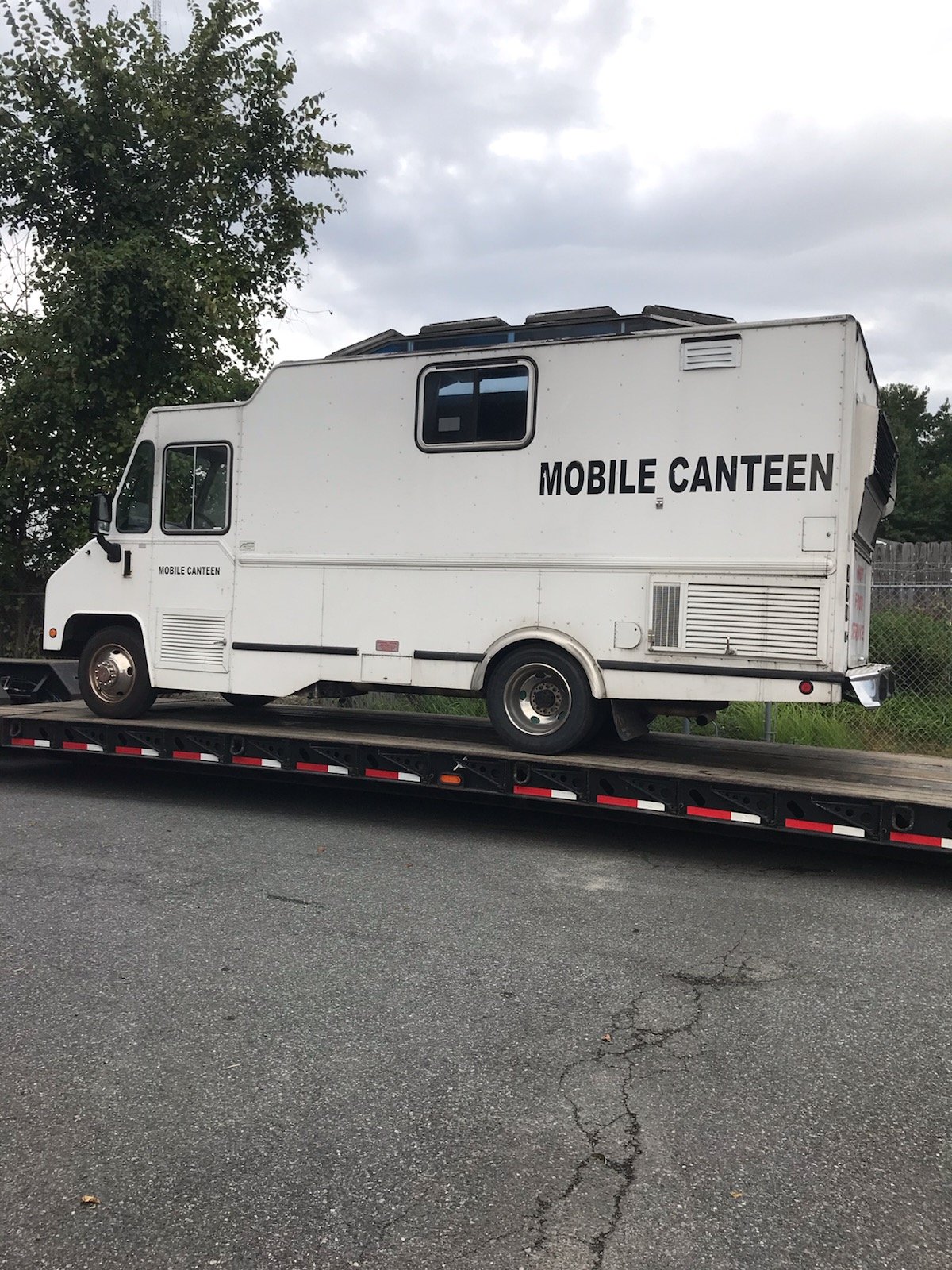
If the truck doesn’t run, has questionable brakes, has no current registration, or is a brand-new build straight from the fabricator, it should ride on a deck. It’s strapped down and moved like any other heavy vehicle, so mileage and mechanical condition stop being a concern. Federal cargo securement rules apply here: 49 CFR 393.128 covers vehicles weighing 10,000 lb or less, and 49 CFR 393.130 covers heavier vehicles and equipment, which includes many loaded step vans.
Height is the big variable. A step van with roof AC units, exhaust hoods, and vents can stand tall, and a standard flatbed adds roughly five feet under it. A step deck or RGN sits lower and leaves more clearance. Our RGN vs. step deck vs. flatbed comparison breaks down deck heights, and our flatbed transport page shows when a deck haul makes sense.
Which Method Fits Your Food Truck?
| Your food truck or trailer | Best method | Why |
|---|---|---|
| Running step van or box-truck food truck, good tires and brakes | Driveaway | A driver drives it to you; usually the fastest and most budget-friendly option |
| Bumper-pull or gooseneck concession trailer, roadworthy | Towaway (hotshot or pickup) | Rolls on its own axles behind a rated truck; no loading equipment needed |
| Non-running truck, bad brakes, or a new build with no plates | Flatbed or step deck | Rides on the deck, so mileage, tires, and drivetrain don’t matter |
| Tall truck with roof AC, vents, or a high box | Step deck or RGN | Lower deck height leaves more room under bridges |
| Several units for a fleet or dealer | Multi-unit deck or scheduled driveaways | Batching pickups lowers your per-unit cost |
What the Hauler Needs From You
Accurate details get you an accurate quote and the right equipment the first time. Have these ready:
- Year, make, model, and type (step van, box truck, bus conversion, bumper-pull, or gooseneck trailer).
- Overall length, width, and height, measured to the highest point (roof AC, vent hoods, light bars, or signs). Measure, don’t guess from the spec sheet; aftermarket builds change everything.
- Weight or GVWR from the door or VIN plate, plus a note on heavy add-ons like generators, water tanks, or smokers.
- Running and braking condition, tire condition, and whether the hitch or coupler is sound.
- Pickup and delivery addresses, access notes (commissary lots, fairgrounds, narrow streets), and your ready date.
- Paperwork: title or bill of sale, registration if it has one, and the seller’s or receiver’s contact.
Width rarely causes trouble for food trucks, since federal rules on the National Network allow vehicles up to 102 inches wide (23 CFR 658.15). Height and length on a deck are what can push a load into permit territory, so the measurements above matter.
Food Truck Prep Checklist
Run through this list a day or two before pickup. Most of it takes an afternoon.
Propane and gas
- Close every LP-gas container valve and appliance valve.
- Make sure cylinders are upright and secured in their mounts or vented cabinet. The NFPA food truck safety guidance calls for secured containers and shutoff valves that can be reached without tools.
- Ask your carrier ahead of time how they want cylinders handled. Some will move secured, closed tanks; others will ask you to remove portable cylinders. Settle it before pickup day.
Kitchen and interior
- Drain fresh water, gray water, and the water heater so tanks don’t slosh or freeze in transit.
- Empty fryers and dispose of grease. Hot oil moving down the highway is a mess at best and a fire risk at worst.
- Remove food, loose utensils, pans, and small appliances. Latch cabinet doors and the fridge, or tape them shut.
- Secure the serving window, awnings, and any fold-down counters. Retract or remove signs and menu boards.
Exterior and mechanical
- Check tire pressure and tread, plus wheel bearings on trailers.
- Test brake lights, turn signals, and running lights (for driveaway and towaway).
- Take a quarter tank of fuel for driveaway; keep it low for a deck haul.
- Disconnect the generator from fuel, and make sure it’s bolted down.
- Fold or remove mirrors, roof items, or antennas that stick out past the body.
Photos and paperwork
- Take date-stamped photos of all four sides, the roof, the interior, and the odometer.
- Note existing dents, scratches, and wrap damage on the bill of lading at pickup.
- Keep keys, spare keys, and any generator or trailer lock keys together for the driver.
What Drives the Cost to Ship a Food Truck
We won’t quote a number before we see your details, because these factors move the price more than anything else:
- Method: driveaway and towaway usually cost less than a deck haul with loading and securement.
- Distance and route: cross-country moves and remote pickup spots cost more than corridor runs between major cities.
- Size and weight: tall or long trucks may need a step deck or RGN, and anything beyond legal limits needs permits.
- Condition: a non-running unit needs a winch or a loading plan.
- Timing: tight festival or event deadlines cost more than a flexible pickup window.
If you’re comparing similar moves, our bucket truck transport Guide and travel trailer transport Guide use the same driveaway, towaway, and deck options.
Delivery Day: How to Inspect Your Food Truck
- Walk around with the driver before signing anything. Compare against your pickup photos.
- Check the roof units, vents, serving window, and awning for shifting or impact.
- Open the interior and look for loose equipment, cracked fixtures, or leaks.
- Write any new damage on the delivery bill of lading, take photos, and get the driver’s signature.
- Before you cook, reconnect propane and run a leak check on every connection, as the NFPA guidance recommends each time a cylinder is replaced.
Ready to Move Your Food Truck?
Whether it’s a running step van, a brand-new concession trailer, or a project truck that needs a deck, Logi Transports matches you with the right carrier and equipment. Licensed freight broker MC-1636889, USDOT 4230991, based in Sebastian, FL, booking moves nationwide.
Call (864) 791-5644, email quotes@logitransports.com, or get your free food truck transport quote today.