

Bought a travel trailer out of state, sold one to a buyer three states away, or just don’t have a truck big enough to pull it? Knowing how to transport a travel trailer the right way saves you money, protects the camper, and keeps you from paying for a tow vehicle you’ll never use again. This Guide walks you through your shipping options, what a hauler needs from you, and a prep checklist you can finish in an afternoon.
Logi Transports books travel trailer moves nationwide from our home base in Sebastian, FL. Below is the same playbook we use when you request a quote.
Your 3 Options for Shipping a Travel Trailer
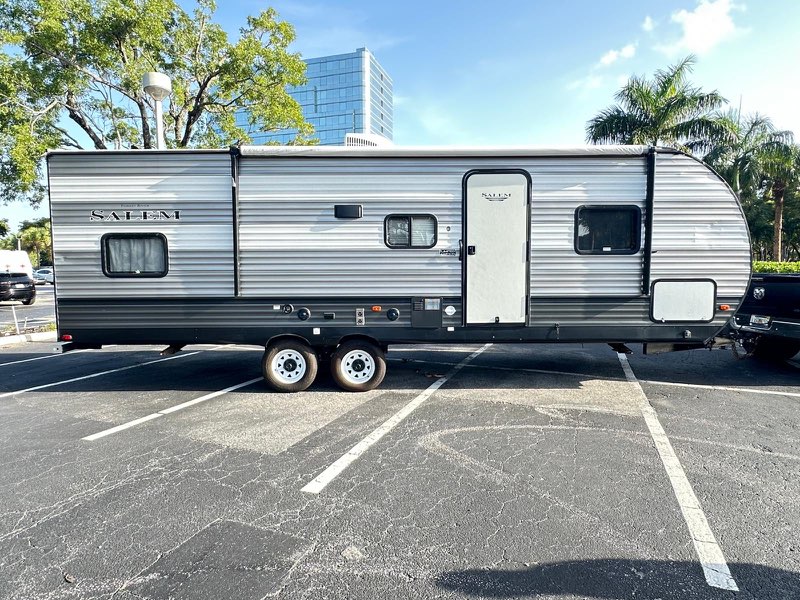
A travel trailer is a bumper-pull camper. It hitches to a ball on the back of a pickup or SUV, not to a kingpin in the truck bed like a fifth wheel. That one detail shapes how it can be moved.
1. Towaway with a pickup (most common)
A professional driver hooks your trailer to a properly rated pickup and tows it on its own wheels to the destination. This is the go-to method for most travel trailers because it’s fast to schedule and usually the most cost-effective. Your trailer’s tires, bearings, brakes, and lights do the work, so they need to be roadworthy. If you’re new to the concept, our power only transport explainer covers how hiring just the truck and driver works.
2. Flatbed or deck haul
If the trailer has bad axles, a cracked frame, flat or dry-rotted tires, or no working lights, towing it on its own wheels is a gamble. In that case it can be loaded onto a flatbed or step deck and strapped down. It costs more and needs a way to load it (winch, ramps, or a forklift for small campers), but it’s the safe call for project trailers and storm-damaged units. See our flatbed transport page for when a deck makes sense.
3. Dealer and multi-unit moves
Dealers moving new inventory from a manufacturer lot, or fleets relocating several rental campers, usually book towaway runs in batches. The prep and paperwork are the same; the difference is scheduling and pickup windows. Our RV transport page covers recurring and dealer moves.
Towaway vs. Flatbed: Quick Comparison
| Factor | Towaway (on its wheels) | Flatbed / deck |
|---|---|---|
| Best for | Roadworthy trailers with good tires, bearings, brakes, and lights | Damaged, non-rolling, or very old trailers |
| Typical cost | Lower | Higher (bigger truck, loading equipment) |
| Scheduling | Usually easier to book | Fewer available trucks |
| Wear on trailer | Adds road miles to tires and bearings | No miles on the trailer’s running gear |
| Loading needs | Just a hitch-up | Winch, ramps, or lift at both ends |
What a Hauler Needs to Know Up Front
Accurate details get you an accurate price and the right truck. Before you call or fill out the quote form, gather:
- Year, make, model, and length (bumper to coupler, not just the “floor length” on the brochure).
- Dry weight and GVWR from the sticker inside the door or on the tongue. The driver matches the pickup to these numbers.
- Ball size and hitch type (2″, 2-5/16″, weight-distribution hitch, sway control).
- Brake type (electric brakes are standard on most tandem-axle units) and whether the breakaway battery holds a charge.
- Number of axles and tire age (the four-digit DOT date code on the sidewall).
- Pickup and delivery addresses with notes on gates, tight turns, low trees, or dealer hours.
- Title or bill of sale and any lienholder or dealer release paperwork.
Measuring a camper is a lot like measuring a fifth wheel. Our fifth wheel measuring guide shows where to put the tape so your numbers match what the driver sees.
Travel Trailer Prep Checklist
Most delays and damage claims trace back to prep. Run through this list a day or two before pickup.
Running gear
- Inflate tires to the pressure on the trailer’s tire placard. Replace any with cracking, bulges, or very old date codes. Pack a good spare.
- Have the wheel bearings greased or inspected if you can’t remember the last service.
- Check lug nuts for proper torque.
- Test the brakes and the breakaway switch. Federal rules for commercial towing (49 CFR 393.43) require trailer brakes that apply automatically on breakaway and stay applied for at least 15 minutes, so a dead breakaway battery can hold up your pickup.
Lights and hitch
- Plug into a tow vehicle and test running lights, brake lights, and both turn signals.
- Inspect the coupler latch, tongue jack, and safety chains. Chains should be intact, with hooks that close. The federal standard for towed safety devices (49 CFR 393.70) requires chains or cables strong enough to hold the full weight of what’s being towed.
- Leave the weight-distribution bars and sway control with the trailer if you use them, and tell the hauler.
Inside the camper
- Close the propane tank valves and secure the tank covers.
- Drain the fresh, gray, and black tanks. Water is heavy and sloshes, and cold-weather routes can freeze the lines.
- Latch every cabinet, tape the fridge and microwave doors, and lay loose items on the floor or bed.
- Remove TVs from wall mounts if they aren’t factory-secured, and take out valuables and personal documents.
- Close and lock all windows, roof vents, and the entry door. Hand over a set of keys.
Outside the camper
- Retract slide-outs, the awning, stabilizer jacks, and the entry steps.
- Check that slides lock and the awning arms are latched. Wind at highway speed finds every loose part.
- Remove bikes, kayaks, or cargo from bumper racks unless the hauler approves them.
- Wash the trailer and take dated photos of all four sides, the roof (if safe), and any existing dings. That’s your baseline for the delivery inspection.

What Affects the Cost to Ship a Travel Trailer
Every quote is built on the same handful of factors. We won’t quote a flat number here because the market moves, but knowing what drives the price helps you control it:
- Distance and lane. Busy corridors between major metros book faster than rural endpoints.
- Size and weight. Longer, heavier units need a heavier-duty pickup.
- Condition. A non-roadworthy trailer that needs a deck haul costs more than a towaway.
- Timing. Spring and early summer, when campers head north, are busier. Flexible pickup dates help.
- Access. Tight storage lots, gated communities, and soft ground add time.
Pickup and Delivery Day
At pickup, walk around the trailer with the driver and note any existing damage on the bill of lading. Confirm the hitch setup, brake controller connection, and safety chains before the truck rolls. At delivery, repeat the walkaround before you sign. If you spot new damage, write it on the paperwork and take photos right then; a clean signature makes a claim much harder later.
Before you book anyone, look up the carrier or broker on the FMCSA’s SAFER Company Snapshot to confirm active authority. You can check Logi Transports too: MC-1636889, USDOT 4230991.
Travel Trailer vs. Fifth Wheel vs. Motorhome
Each RV type ships a little differently. A fifth wheel needs a pickup with a bed-mounted hitch, so start with our fifth wheel prep guide. A motorhome can be driven, towed, or hauled; see how to ship a motorhome. And if your “camper” is really a tiny home on wheels, how to move a tiny house covers the extra weight and height checks.
Common Mistakes to Avoid
- Booking on “floor length” instead of true overall length.
- Leaving water in the tanks or propane valves open.
- Skipping a tire check on a trailer that’s been parked for a year or more.
- Forgetting the keys, the title, or the gate code.
- Signing the delivery receipt before you inspect the trailer.
Get a Travel Trailer Transport Quote
Whether it’s a 16-foot teardrop or a 35-foot tandem-axle family camper, Logi Transports matches your trailer with a vetted driver and the right tow setup, nationwide. Need a truck for a trailer that’s already set up to tow? Ask about our power only trailer service.
Call (864) 791-5644, email quotes@logitransports.com, or request your free quote online. Tell us the year, make, length, and pickup and delivery ZIP codes, and we’ll take it from there.